You’ve seen the headlines.
Virtual influencers earning six figures.
AI avatars “teleporting” into trends.
Digital twins producing endless content without burnout.
And now you’re searching for Imimic because you’re wondering:
Is this the next evolution of online influence?
Or just another overhyped AI tool?

You’re not naïve.
You understand social media is competitive.
You know attention equals leverage.
But you also know software alone doesn’t create influence.
Let’s break this down clearly, strategically, without exaggeration.
Understanding the AVATAR: Who Is Searching for Imimic?
Based on the search intent (informational with light commercial investigation), the typical reader is:
- A marketer, creator, coach, or agency owner
- Exploring AI-driven growth strategies
- Curious about virtual influencer monetization
- Evaluating whether this is scalable or gimmicky
Emotional State
- Curious but cautious
- Efficiency-driven
- Slight FOMO about the AI wave
- Concerned about wasting money on hype
Awareness Level
You know virtual influencers exist.
You want to know whether Imimic makes this accessible and profitable.
What Is Imimic?
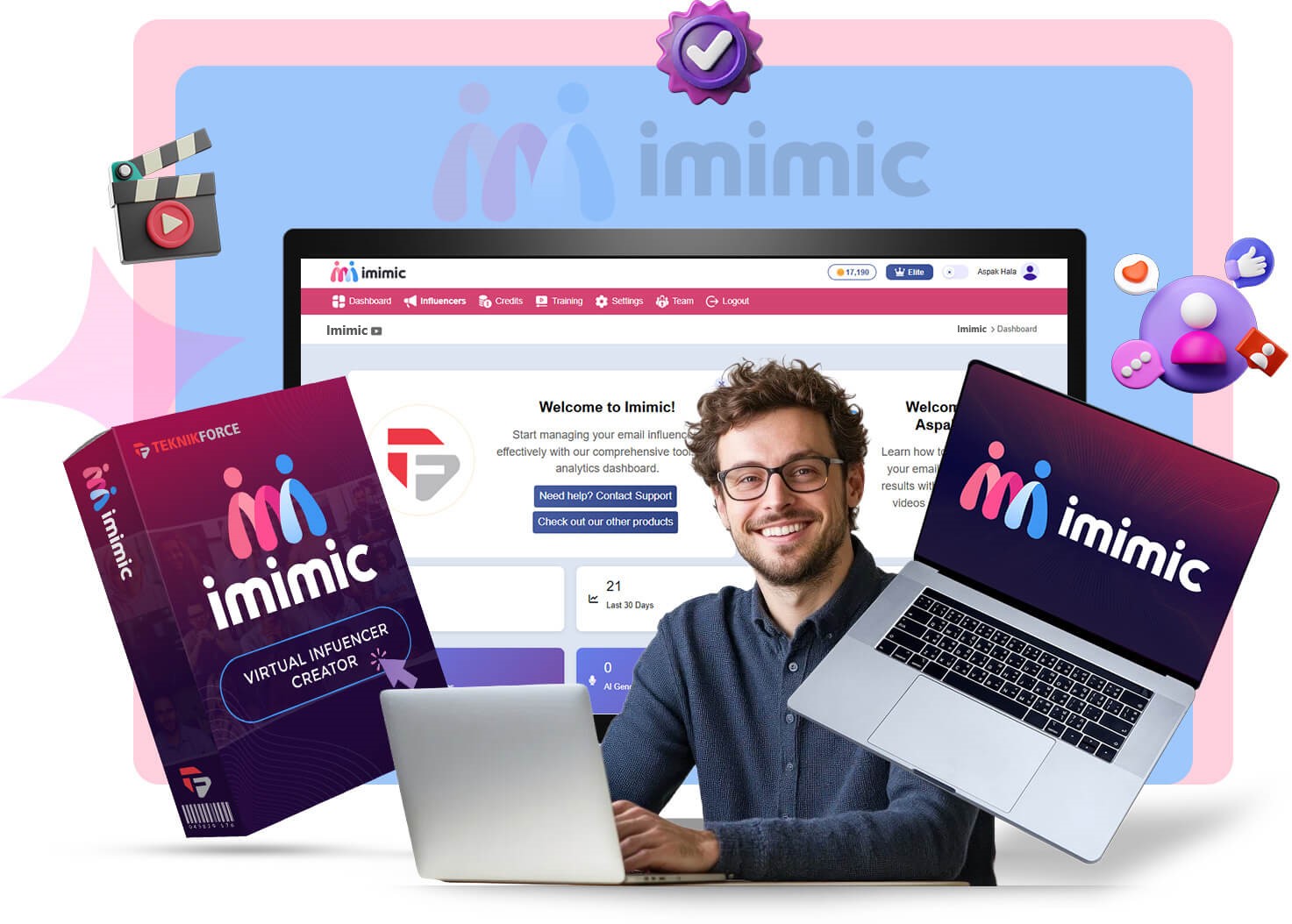
Imimic is positioned as an AI Virtual Influencer and Digital Twin Creator.
It claims to allow users to:
- Design custom AI characters
- Generate realistic images
- Create AI-powered videos
- Produce social media posts
- Deploy avatars across TikTok, Instagram, YouTube, Facebook, X, and more
The core promise is simple:
Create a virtual personality that builds audience and revenue without cameras, studios, or personal exposure.
That’s a powerful proposition.
But power requires context.
The Core Problem Imimic Tries to Solve
Modern creators face three major constraints:
1. Time
Content creation is labor-intensive:
- Filming
- Editing
- Retakes
- Styling
- Scheduling
AI digital twins promise scalable output without physical effort.
2. Identity Limitations
Some niches reward specific:
- Age demographics
- Visual aesthetics
- Cultural alignment
- Location relevance
Imimic markets the idea that you can enter any niche by deploying the “perfect” avatar.
That removes identity barriers at least visually.
3. Burnout
Consistent content output drives algorithm growth.
Humans burn out.
Avatars don’t.
That’s the structural advantage being sold.
How AI Virtual Influencers Actually Work
Platforms like Imimic typically rely on:
- Generative image models
- AI video synthesis
- Facial animation engines
- Text-to-speech systems
- Content automation layers
The output:
- Realistic images
- Talking head videos
- Trend-based clips
- Persona-driven posts
The avatar becomes the face of the brand.
You become the operator behind it.
The Monetization Model: Is It Realistic?

Yes, virtual influencers can generate income.
Real-world examples include:
- Brand sponsorships
- Affiliate marketing
- Digital product sales
- Agency services
- Licensing and character branding
However, revenue does not come from realism alone.
It comes from:
- Audience growth
- Engagement rates
- Brand positioning
- Strategic partnerships
Software creates assets.
Strategy creates income.
Misconceptions About Virtual Influencer Success
“More Content = Guaranteed Growth”
Volume increases opportunity.
But algorithms reward:
- Watch time
- Engagement depth
- Authenticity signals
Low-quality AI content can reduce reach.
“Hyper-Realism Equals Trust”
Visual realism does not automatically equal credibility.
Trust comes from:
- Consistent messaging
- Value delivery
- Emotional resonance
Audiences are increasingly aware of synthetic media.
Transparency matters.
“AI Eliminates Effort”
It reduces production friction.
It does not eliminate:
- Ideation
- Audience research
- Niche positioning
- Brand development
Execution remains strategic.
The Psychological Appeal of Imimic
Imimic taps into powerful human drivers:
Freedom
Create without showing your face.
Status
Operate in premium niches regardless of personal identity.
Security
Build an asset that scales without burnout.
Efficiency
10x content production potential.
These drivers are legitimate.
But they must be balanced with realistic implementation.
Risks to Consider Before Using Imimic
1. Platform Policy Risk
Social platforms increasingly regulate:
- Deepfakes
- Synthetic media
- Misleading identity representation
Failure to disclose AI usage may create compliance issues.
2. Ethical Transparency
Audiences value authenticity.
Positioning a digital twin as a real human without disclosure can erode trust.
Strategic transparency protects long-term credibility.
3. Market Saturation
As AI avatar tools become more accessible:
- Differentiation becomes harder
- Visual novelty fades
- Storytelling becomes the competitive edge
Your edge must go beyond realism.
Strategic Framework: Should You Use Imimic?
Use this evaluation model:
Step 1: Define Your Objective
- Brand building?
- Affiliate marketing?
- Agency service?
- Passive content monetization?
Clarity prevents wasted execution.
Step 2: Assess Your Content Strategy
Do you already understand:
- Audience pain points?
- Platform algorithms?
- Content hooks?
- Conversion funnels?
If not, software will not compensate.
Step 3: Pilot With Metrics
Track:
- Engagement rate
- Follower growth
- Cost per content asset
- Revenue attribution
Data determines viability.
Who Imimic May Be Best For
- Agencies creating influencer-style campaigns
- Entrepreneurs uncomfortable on camera
- Niche testers exploring multiple markets
- Affiliate marketers scaling content volume
Who Should Be Cautious
- Beginners without marketing fundamentals
- Users expecting instant passive income
- Businesses reliant on deep personal brand trust
AI influence works best when paired with strategic clarity.
Long-Term Sustainability of AI Influencer Models
The AI influencer market is growing.
Forecasts project billions in synthetic media expansion.
But long-term winners will:
- Build recognizable character brands
- Deliver consistent value
- Maintain ethical transparency
- Develop monetization systems beyond sponsorship
Virtual personas must evolve into brands, not gimmicks.
Imimic Is a Tool, Not a Shortcut
- Scalable avatar creation
- Rapid content production
- Demographic flexibility
- Trend-based participation
It does not guarantee:
- Influence
- Audience loyalty
- Revenue
Those remain human-driven outcomes.
If you’re considering Imimic, approach it as:
Infrastructure.
Not magic.
Map your niche.
Design your character strategically.
Pilot responsibly.
Measure performance.
The future of influence may include digital twins.
But the future of profit still belongs to disciplined operators.
Frequently Asked Questions (FAQ)
1. What is Imimic and how does it work?
Imimic is an AI-powered virtual influencer and digital twin creation platform. It allows users to design realistic AI avatars that can generate images, videos, and social media content for platforms like TikTok, Instagram, and YouTube. The user controls the strategy and direction, while the software generates the visual and media assets.
2. Can Imimic really help you make money?
Imimic can create scalable content assets, but revenue depends on strategy. Monetization typically comes from brand deals, affiliate marketing, digital products, or agency services. The software enables production it does not guarantee income without a defined growth and monetization plan.
3. Do virtual influencers build real audience trust?
They can, but only when paired with consistent messaging, value-driven content, and transparency. Trust is built through emotional connection and relevance, not just visual realism. Ethical disclosure of AI-generated personas is strongly recommended.
4. Is using a digital twin compliant with social media platform policies?
Policies vary by platform and are evolving. Some platforms require disclosure of synthetic or AI-generated media. Users should review each platform’s content policies to avoid account restrictions or removal.
5. Who is Imimic best suited for?
Imimic may be suitable for:
- Marketers scaling content volume
- Agencies offering virtual influencer services
- Entrepreneurs uncomfortable appearing on camera
- Niche testers experimenting with different demographics
It may be less suitable for creators whose brand depends heavily on personal authenticity.
6. What are the main risks of using AI virtual influencers?
Key risks include:
- Platform compliance issues
- Audience distrust if transparency is lacking
- Market saturation as AI avatar tools become common
- Over-reliance on automation without strategic direction
Careful positioning and oversight reduce these risks.
Recommended Resources
To better understand the broader landscape of virtual influencers and synthetic media, explore Influencer Marketing Hub’s guide to virtual influencers, which breaks down industry trends, monetization models, and real-world case studies.
For ethical and regulatory considerations around AI-generated content, review the FTC’s guidelines for social media influencers, which outline transparency and disclosure best practices critical for long-term brand credibility.